
The Two Gulfs
How a Category 3 Landfall Near Sabine Pass Could Split Crude, Refined Products, US Gas, and Global LNG While Hormuz Remains Constrained


Black Paper: The Two Gulfs
Operational research and geospatial intelligence by Lowcountry Wildfire 🔥. System mapping, market transmission, and final text by The Black Line.
The Calm Between Systems
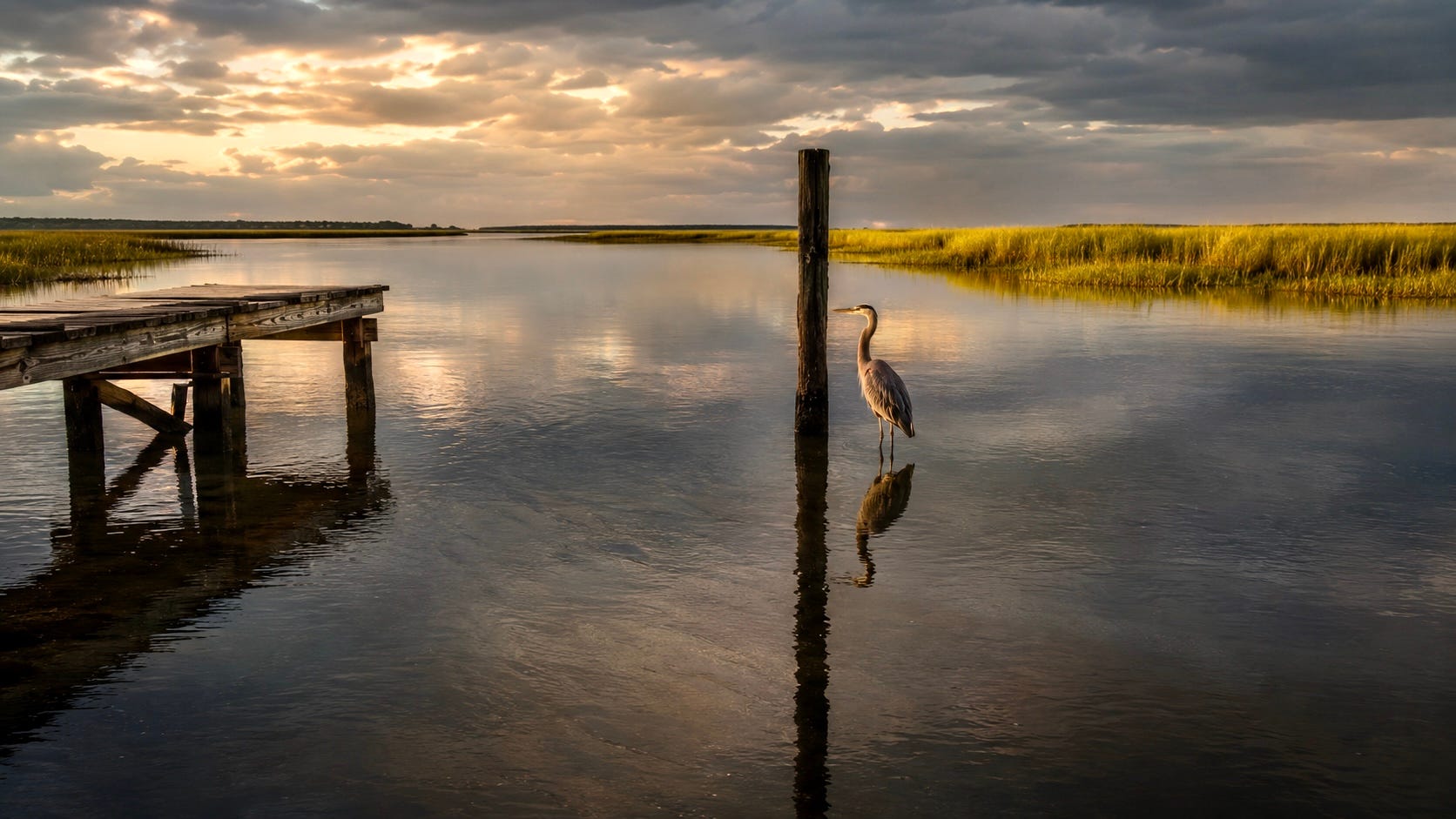
A collaborator who keeps a fixed perch above the Wando River, in the South Carolina Lowcountry, describes one specific moment twice a day. Slack tide. The water goes flat, the surface loses its seams, and a stranger standing on the dock would call it still. It is not still. It is the outgoing river and the incoming sea holding each other in perfect balance for a few minutes before one of them wins. The force did not leave. It is stored, cancelled against itself, waiting for the turn.
On the Wando, the most dangerous water is the water that looks calm. Slack tide is not the absence of force. It is force cancelling force, right before it moves.
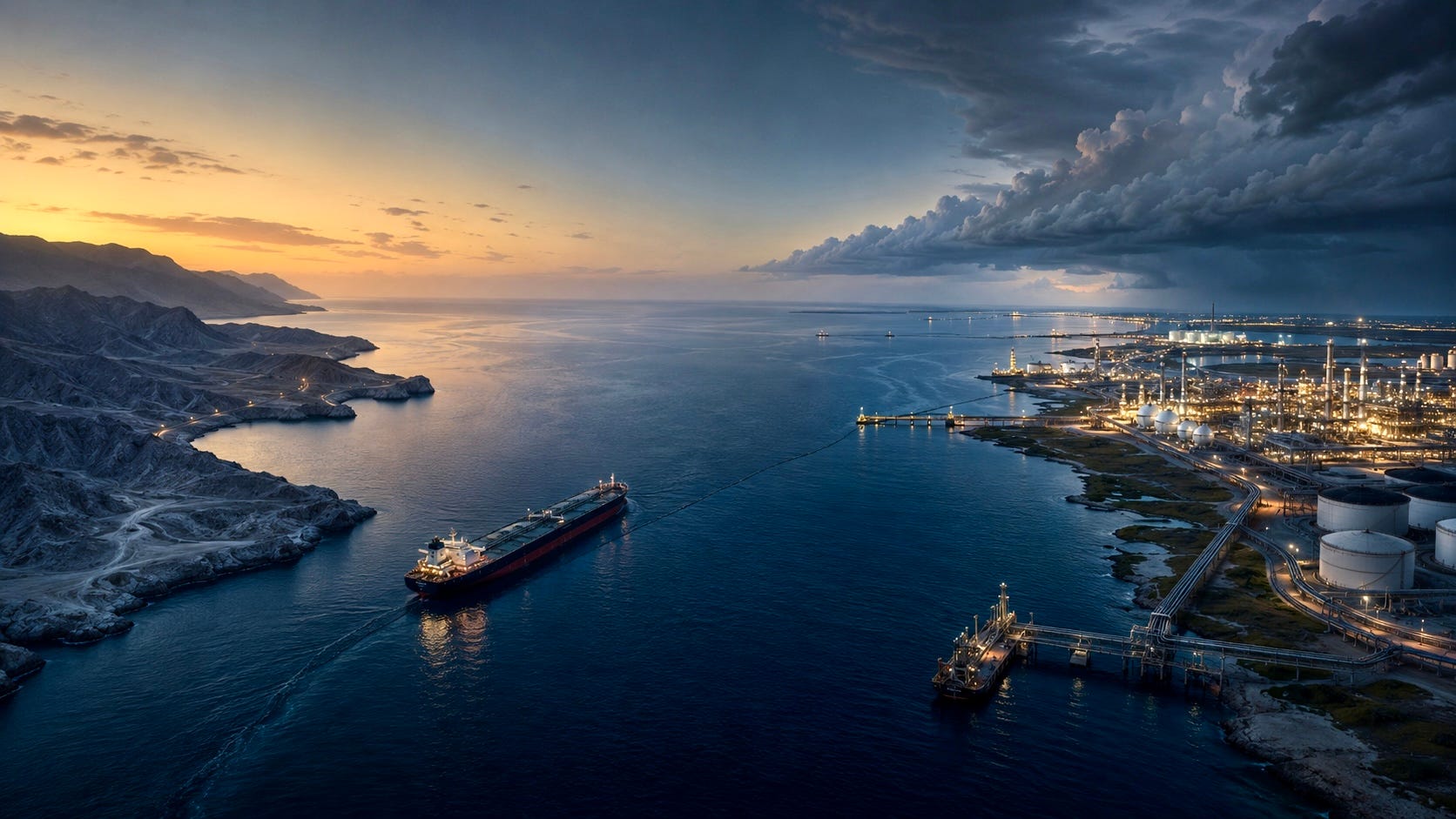
The global energy system has its own slack tide, and in the summer of 2026 it is sitting in one. The surface looks like two separate stories filed under two separate desks. One desk covers a war in the Persian Gulf. The other covers hurricane season on the American Gulf Coast. They share a word and almost nothing else, and that is exactly why the market is treating them as unrelated. They are not unrelated. They are the two ends of a single machine that moves, refines, and delivers the energy a modern economy runs on, and both ends have quietly lost their slack at the same time.
At one end sits the Strait of Hormuz, the narrow saltwater gate through which roughly a fifth of the world’s seaborne oil and liquefied natural gas normally passes before it ever reaches an ocean. At the other end sits Texas and Louisiana, a dense concentration of refineries, gas liquefaction plants, ship channels, pipelines, and offshore support along the Texas and Louisiana coast. Hormuz governs whether the raw material can move. The Gulf Coast governs whether it can be turned into gasoline, diesel, jet fuel, power, and export cargoes. One is the throat. The other is the stomach.
The war threatens the barrels before they move. The hurricane threatens the machinery that turns them into everything the modern economy needs.
This is not a piece about a single higher price for energy. A single higher price would be the easy outcome, the one the headlines are built to describe. The harder and more accurate outcome is fragmentation. When a supply gate and a processing gate lose reliability at the same time, the shortage does not spread evenly. It gets trapped in different places, at different stages of the chain, and prices that normally move together begin to move apart. Crude can firm while certain barrels weaken against it. Refined products can climb while the gas that feeds export terminals slips. The word energy stops being one number and becomes a map.
The Persian Gulf side is already real. On July 14, 2026, the United States reinstated a naval blockade covering traffic entering or leaving Iranian ports, while commercial movement through Hormuz remained severely constrained. The American Gulf side remains a modeled scenario, but the basin is no longer entirely blank. At 8 p.m. EDT on July 15, the National Hurricane Center was monitoring two areas of possible development. One was an area of low pressure forecast to form over the northeastern Gulf, with a near zero chance of tropical development within 48 hours and a 20% chance within seven days. The other was a tropical wave in the eastern Atlantic with a 10% chance of development. Neither system was the Category 3 Sabine Pass scenario modeled in this piece, and no tropical cyclone had formed. That distinction matters: this analysis maps exposure, not a forecast track.
So here is the question this piece exists to answer, and it is a question about physics before it is a question about price: what happens when the world loses dependable movement at one end of the energy system and processing capacity at the other, in the same window, and the two failures are allowed to compound?
The full reading continues below the line.
Paid readers get the complete mechanism, the scenarios, who wins, who loses, and what would break this thesis.
One subscription opens every thesis in the archive.
The First Gulf Narrows

 | A guest post by
|