
India: Narrative vs. Hardware
The Physical Reality of the Next China



Mumbai
The Physical Reality of the Next China
India is looking like a contender for the “Next China”, as it appears supported by fundamentals across eight critical dimensions. Demographically, India is a younger nation of 1.4 billion people with rising incomes; economically, growth rates exceed China’s and private investment is accelerating; financially, India’s fiscal position offers policy space that China lacks.
Industrially, India now offers some of the lowest manufacturing costs globally, while geopolitically, it is repositioning as a trusted alternative to China for Western supply chains. Policy frameworks promise manufacturing acceleration, labour law simplification, and an energy transition; logistics infrastructure is expanding, particularly through BIMSTEC regional corridors; and energy transition commitments position India as a climate leader in a fragmented world order, where it seeks to anchor supply chains outside the American - Chinese tension zones.
Yet scrutinise each dimension closely, and a different narrative emerges: India possesses the building blocks of global manufacturing dominance but has constructed no coherent architecture to integrate them. Instead, what exists is a series of policy domains, each pursuing legitimate objectives in isolation, that collectively create cascading bottlenecks. These bottlenecks do not merely slow progress, they compound across dimensions, creating a multiplier effect of constraint.
The result is an economy with fewer constraints than it should experience, but more constraints than its fundamentals justify. This is the physical reality of India’s ambition: a nation in the early stages of simultaneously managing eight critical dimensions of competitive positioning, but with governance and policy architectures too fragmented to allow coherence across these dimensions.
Fragmentation at scale creates pathology.
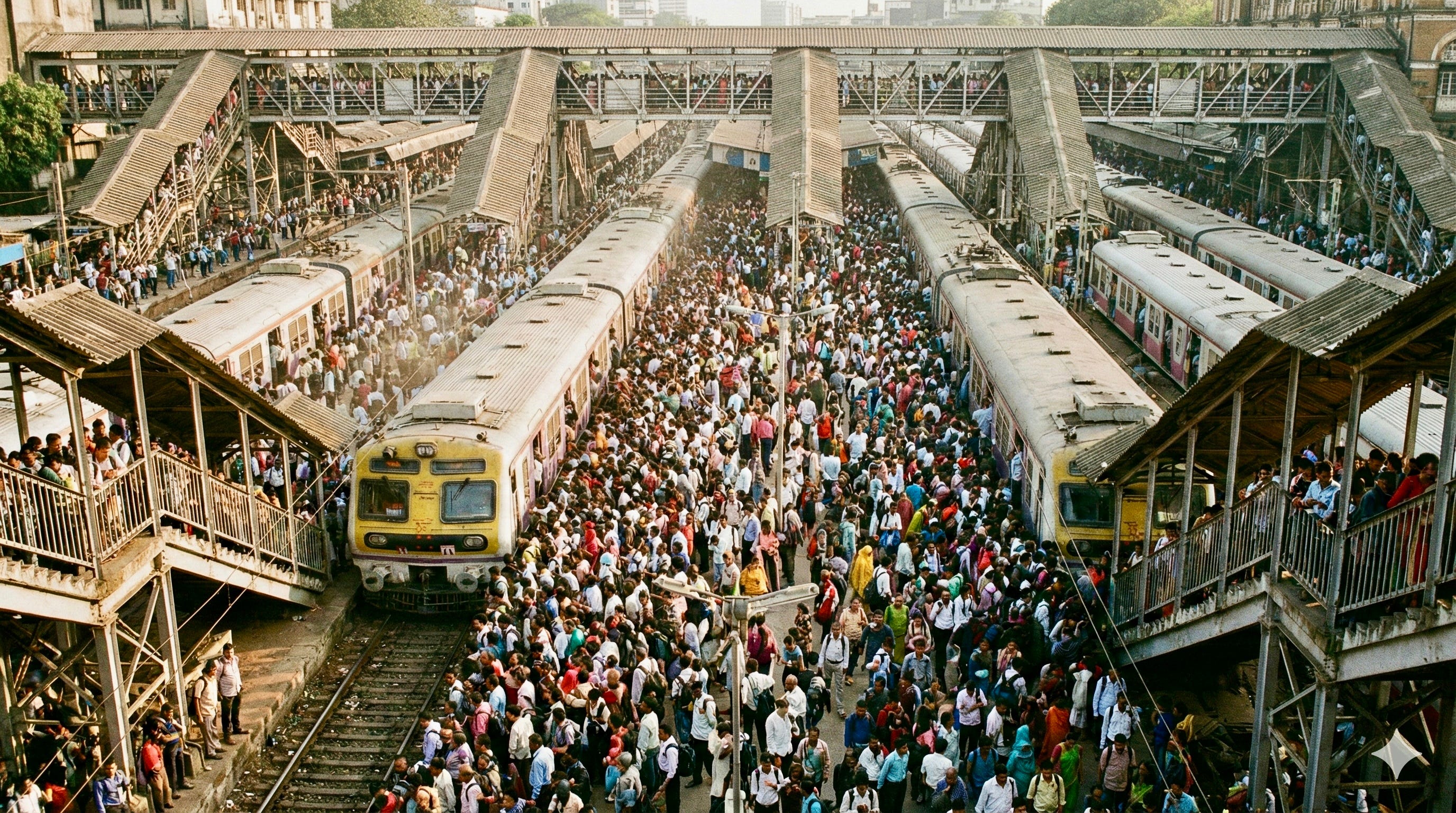
1. From Fundamentals to Hardware
The macroeconomic narrative regarding India highlights the demographic dividend and GDP growth, but industrial viability lies in the robustness of physical infrastructure. A granular analysis of the “shop floor” reveals a battle between accelerated modernisation and persistent structural bottlenecks.
The transition of global supply chains, often synthesised in the “China +1” strategy, collides with an immediate physical barrier: the host nation’s hardware. Here, “hardware” refers not merely to electronic equipment, but to the totality of the operational infrastructure sustaining industrial manufacturing. India, positioned as the primary alternative to Chinese manufacturing dominance, presents a scenario of extreme contrasts where optimistic official data masks daily operational frictions.
For the industrial investor or supply chain strategist, India’s attractiveness cannot be measured solely by fiscal incentives or population volume. The viability equation depends on five critical physical vectors: the real reliability of the energy matrix; the speed and hidden costs of internal logistics; the depth of dependency on imported strategic components; the emergence of climate risk as a factor in labour productivity; and the effective technical qualification of the available workforce.
The central premise is that India does not offer a “plugandplay” substitution for the infrastructure of China’s East Coast. The country operates a system in deep transition, where the efficiency of world class ports coexists with low speed highways, and where the low nominal cost of energy is nullified by the imperative need for private redundancy.
Understanding this hardware is a prerequisite for any allocation of productive capital in the subcontinent.
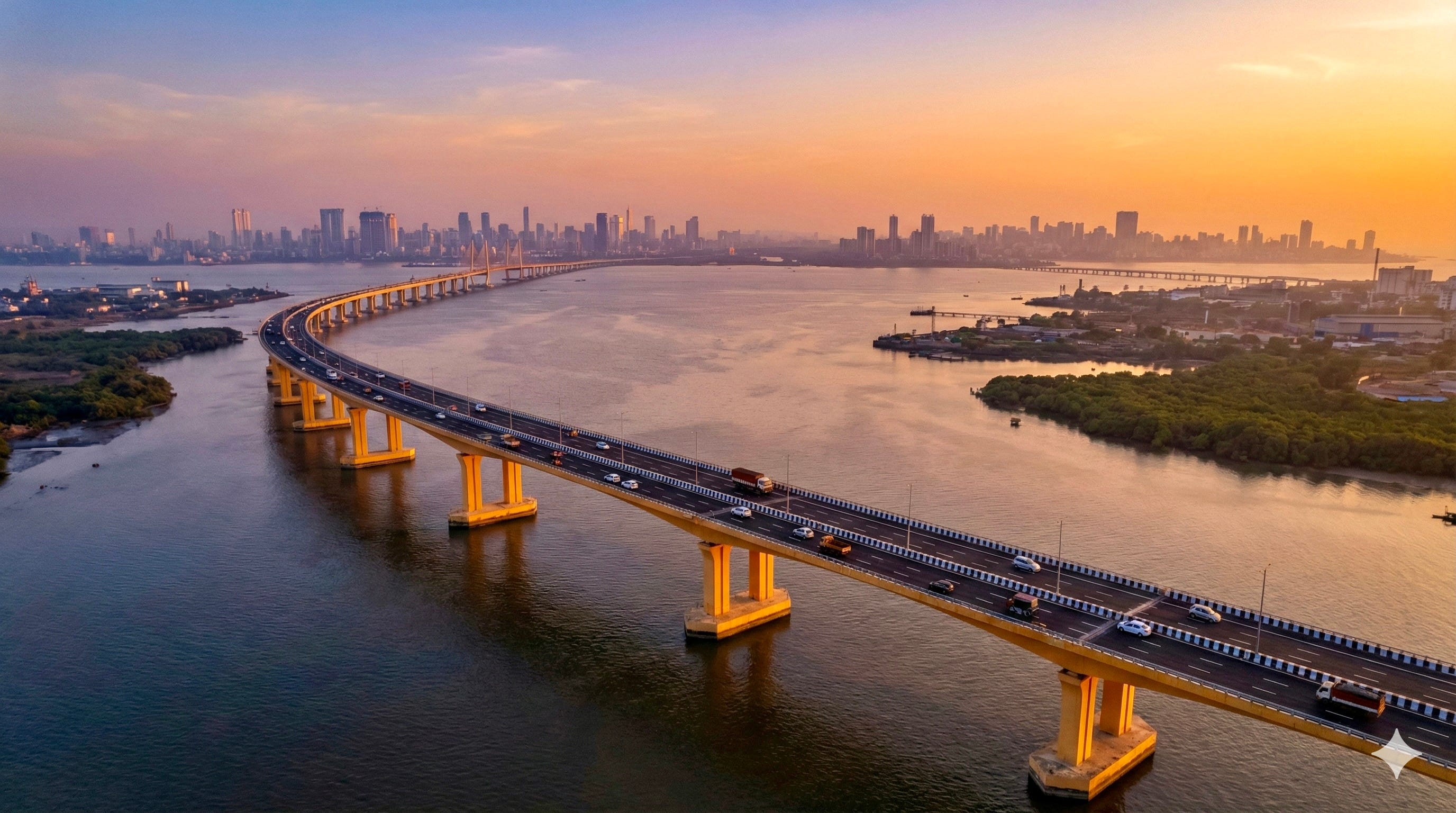
Mumbai Trans Harbour Link
2. Economics and Finance: Misalignment at the Core
India’s economic growth has decelerated from earlier highs to a 6 to 7 per cent trajectory, despite conditions suggesting 8 to 10 per cent is feasible. The gap represents an opportunity cost of 400 to 600 billion dollars annually: capital not invested, productivity not deployed, and employment not created. The source of this gap is not capital scarcity or technological absence; it is rooted in how the fiscal system allocates responsibility and revenue between the Union and states.
The 16th Finance Commission, operationalised in 2026, retained states’ nominal tax share at 41 per cent. On paper, this appears stable; in practice, the Centre has systematically shifted revenue raising mechanisms toward cesses and surcharges that bypass the state revenue share, reducing effective devolution to about 33 per cent.
States are constitutionally assigned mounting expenditure obligations without proportionate revenue instruments, forcing them into debt to finance health, education, policing, rural development, infrastructure, and industrial support. With state debt to GSDP at 27.2 per cent and revenue deficit grants discontinued, fiscally stressed states are cutting capital expenditure precisely when manufacturing expansion requires investments in reliable power, last mile logistics, industrial parks, and workforce skilling.
Private investment has reached decadal peaks, yet the returns on this capital are diluted because enabling infrastructure and regulatory coherence are not uniformly available. A manufacturer in Gujarat benefits from state capacity and central attention; a manufacturer in Maharashtra or Punjab faces uneven power availability, logistics fragmentation, and fiscal stress.
Manufacturing GVA growth around 9 per cent thus coexists with dissipated productivity gains because the fiscal misalignment channels India’s macro policy space into state level distress rather than into a coherent national hardware upgrade.
3. Energy: Nominal Parity, Real Instability
The primary input for industrialisation is electricity, and India presents a tariff paradox that defines its manufacturing competitiveness. In nominal terms, the country has achieved attractive cost parity: data from 2024 places the average industrial tariff around 0.07 dollars per kWh, competitive with China’s 0.088 to 0.10 dollars and drastically lower than the United Kingdom’s or Germany’s. In isolation, this suggests a comparative advantage for electricity intensive industries.
However, the nominal cost metric is insufficient to capture the operational reality. The stability of the Indian grid suffers from massive integration of intermittent renewable sources and transmission infrastructure that has not kept pace with generation. Industry operates on a hybrid system of the grid plus diesel generators. An industrial generator of 100 to 200 kVA requires an initial investment between 6,500 and 13,000 dollars, and diesel generation costs two to five times more than the grid, fluctuating between 16 and 40 rupees per unit.
The industry also faces the cost of voltage stabilisationequipment to protect precision machinery against harmonics and fluctuations. The “India Cost” of energy is therefore not the 0.07 dollars on the utility bill, but the weighted average between the official tariff and the inflated cost of energy security.
This micro level instability interacts with the macro levelenergy transition. India has achieved over 50 per cent non fossil fuel installed capacity and added more than 40 GW of renewables through late 2025, but the transition remains policyfragmented.
The cancellation of key green hydrogen tenders, the intensity based rather than absolute emissions trading architecture, and import dependence on electrolysers and critical minerals introduce volatility where multi decadecertainty is required.
In practice, the same investor who confronts powerquality risk at the factory gate also faces policy risk at the project finance level, turning energy from a source of comparative advantage into a structural vulnerability.
4. Logistics: Fast Ports, Slow Hinterland
Indian logistics traverses a performance dichotomy between ports and highways. The port sector represents successful modernisation via automation and public - private partnerships: import container dwell time has fallen to about 2.6 to 3.4 days, outperforming some advanced economies, and hubs like Jawaharlal Nehru Port operate with sub day vessel turnaround times. This indicates that the logistic bottleneck is no longer at the country’s entry point.
The challenge lies in the hinterland. Road transport moves over 70 per cent of national cargo, yet the average speed of a truck stagnates between 300 and 325 km per day, roughly half the Chinese or global benchmark. Low speeds force companies to maintain high safety stocks, immobilising working capital and undermining just in time models.
Beyond physical speed, there is institutional friction: truckers pay billions of dollars annually in bribes at checkpoints, and in hubs like Guwahati, the incidence of bribery approaches universality. These delays and informal payments corrode supplychain predictability, transforming internal logistics into a regime of constant crisis management.
At the regional scale, this friction compounds with incomplete corridor strategies. BIMSTEC corridors such as the Kaladan Multimodal Transit Route and the India-Myanmar-Thailand highway remain delayed or incomplete after more than a decade of planning. India’s logistics costs hover around 8 per cent of GDP, significantly above global best practice, translating into tens of thousands of crores in annual inefficiency that could otherwise fund energy or manufacturing infrastructure.
The result for a manufacturer evaluating “China +1” options is not a clean calculus of porttofactory integration, but a patchwork of efficient gateways connected to inconsistent, corruption laden inland networks.
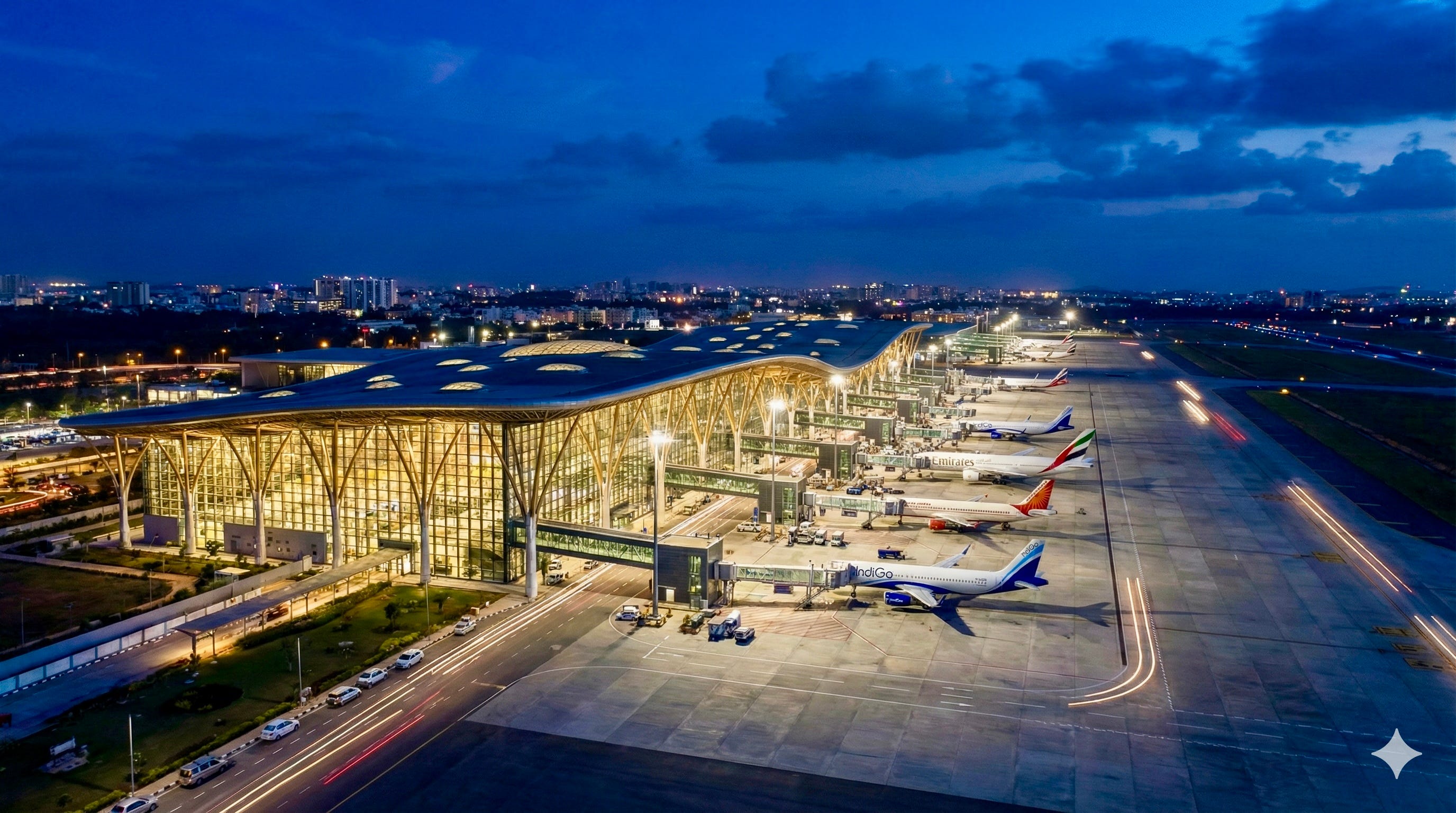
Bangalore Airport
5. Strategic Dependency: The Chinese Link in the Chain
Behind the narrative of self reliance, India’s manufacturing hardware remains deeply entangled with Chinese supply chains. The trade deficit with China, approaching 100 billion dollars in 2024-25, reflects the Indian industry’s inability to produce competitive upstream inputs. India assembles final products; China still provides essential building blocks.
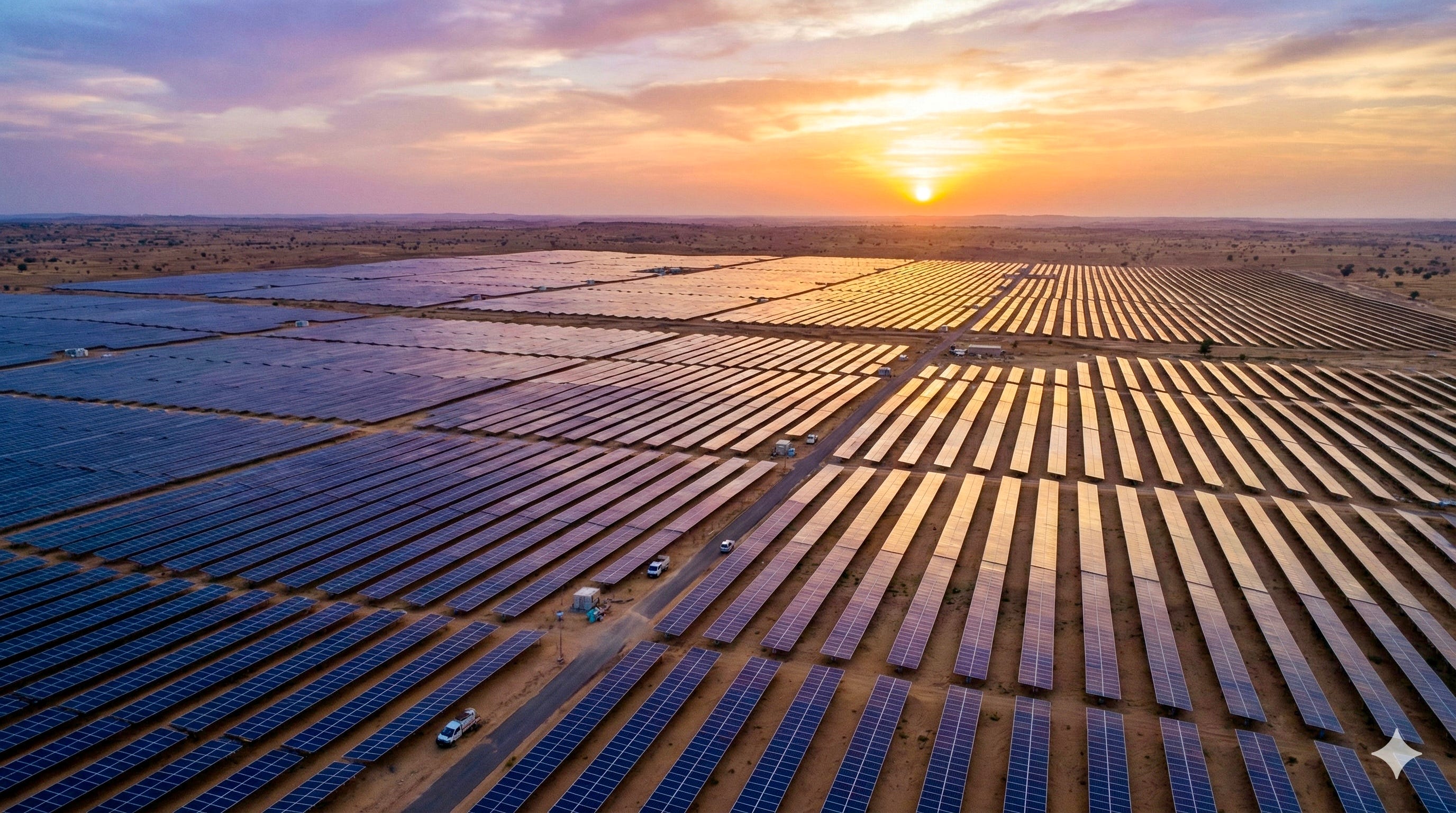
In solar energy, India possesses over 64 GW of module assembly capacity but almost no commercial polysilicon or wafer production. Imports of Chinese solar cells grew by 70 per cent in early 2025, meaning that India’s renewable energy independence is paradoxically built on hardware imported from its primary geopolitical rival. A similar pattern holds in pharmaceuticals: 70 to 80 per cent of Active Pharmaceutical Ingredients are imported, and for critical antibiotics like Amoxicillin, dependency approaches 90 per cent.
In electronics and semiconductors, the vulnerability is twofold: components and capital goods. India imports about 88 per cent of its integrated circuits from China, and more than 99 per cent of the machinery required for chip manufacturing comes from supply chains controlled by China or Western allies. New Indian fabs will thus be born technologically dependent, and replacing these chains requires intensive capital, cheap energy, and decades of know how that fiscal incentives alone cannot supply in the short term.
These dependencies sit uneasily with India’s geopolitical positioning as a “trusted alternative” to China. As electronics exports surge, component imports from China have expanded in parallel, locking India into a low value added assembly role even in sectors that symbolise technological upgrading.
Import concentration has risen, making the system more vulnerable to shocks emanating from a handful of corridors exactly when global manufacturers are seeking resilient, diversified networks.

6. Climate Risk and Human Hardware
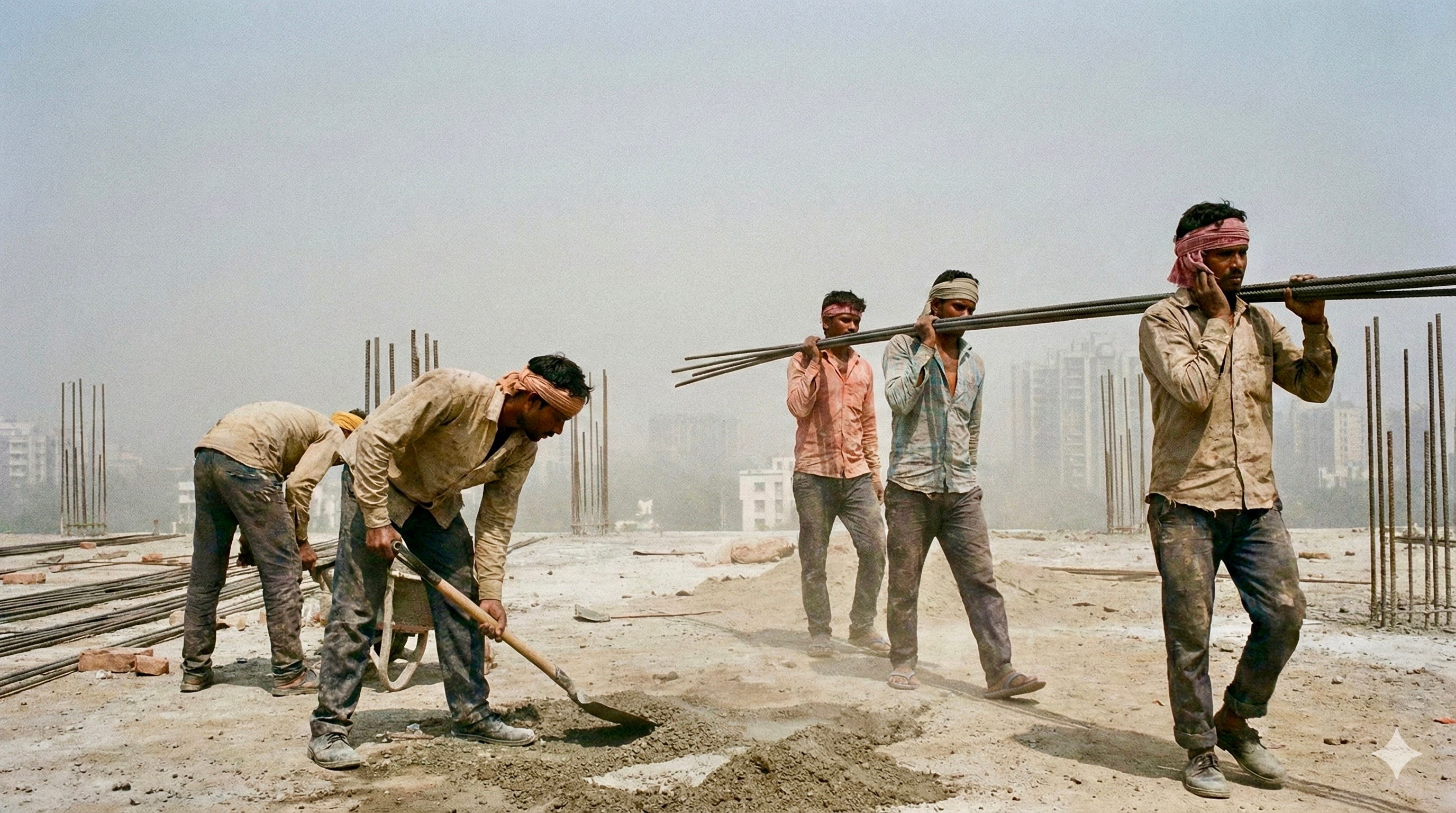
Indian geography has ceased to be merely a logistical backdrop and has become an active operational risk. Extreme heat imposes a physiological ceiling on human output: sectoral studies in weaving and steelmaking indicate that production falls roughly 2 per cent for every degree Celsius above the ideal average temperature, and in construction,productivity can collapse by more than half during severe heatwaves.
Water stress amplifies this constraint. With more than half the territory under high to extreme water stress, industry competes directly with agriculture and urban consumption. The crises in Bengaluru and Gujarat have demonstrated that in moments of scarcity, industrial water is cut first. For new industrial projects, CAPEX must now include robust water treatment and recycling systems as well as active and passive cooling strategies. Climate risk thus inflates operating costs and requires redundancies that are unnecessary in temperate geographies.
The final component of Indian hardware is its workforce. The ofteninvoked demographic dividend, a large, young population, collides with a technical skills deficit. India produces around 1.5 million engineers annually, yet only about half possess the practical skills required by modern industry. Scarcity is particularly acute in strategic sectors like semiconductors, where the immediate need for skilled professionals in design and cleanroom operations vastly exceeds the local talent base.
The absence of a historical ecosystem of precision manufacturing means there is no deep reservoir of tacit knowledge; global firms must invest in intensive internal training or overseas upskilling, delaying full operations. Meanwhile, an internal brain drain draws mechanical and electrical engineers into IT and services, leaving the shop floor without intermediate technical leadership.
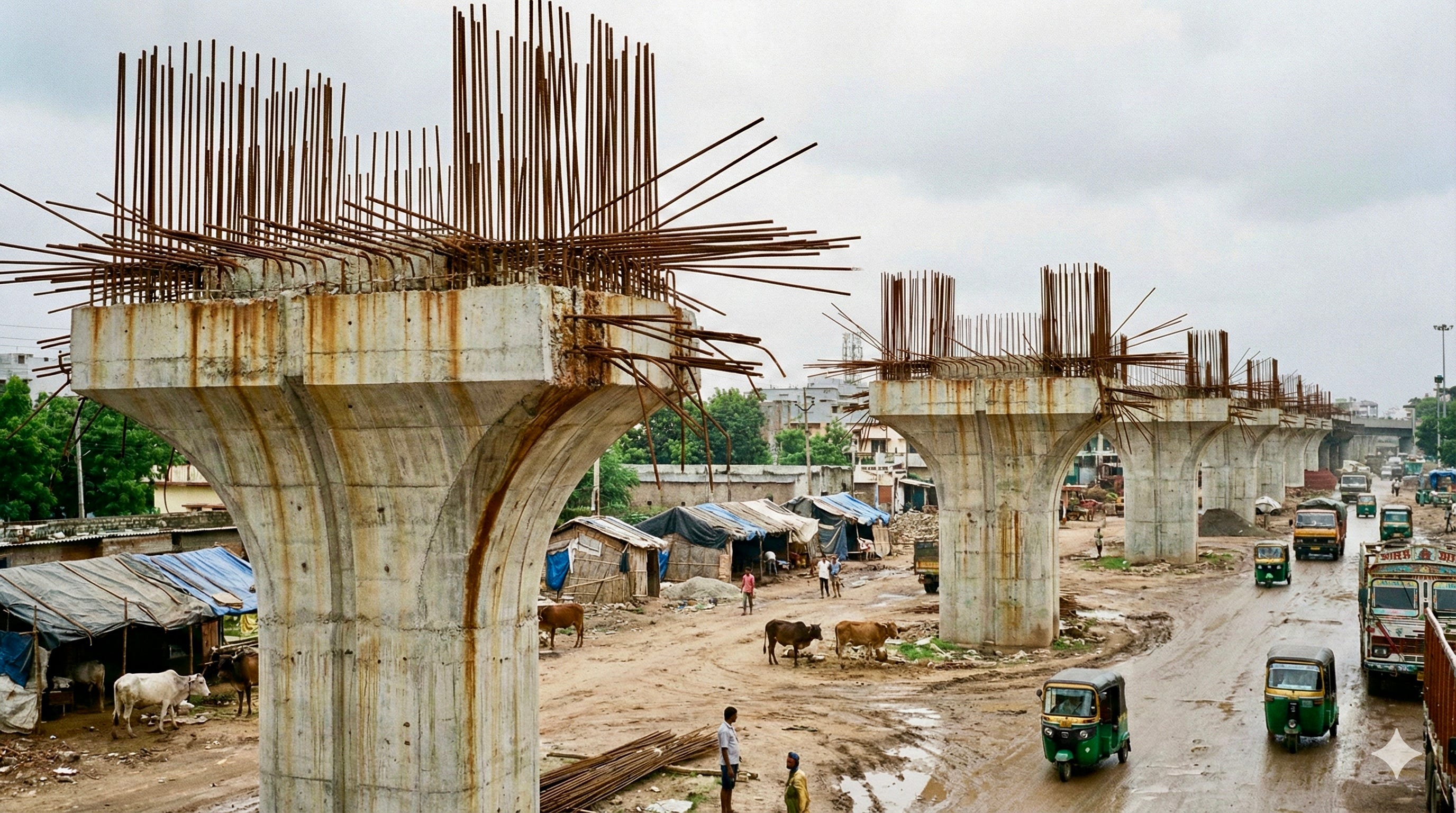
7. Policy and Governance: Fragmentation as Operating System
If hardware is the physical substrate, governance is the operating system, and it is misaligned with the demands placed upon it. India’s fiscal federalism, environmental regulation, and labour governance were designed to distribute responsibilities and protections; in practice, they often produce scissors effects, with the Centre setting ambitions and the states struggling to implement them coherently.
Land acquisition under the 2013 LARR framework remains the single largest category of project impediment tracked in major infrastructure monitoring systems, accounting for over a third of issues. Environmental regulation, theoretically coherent, is enforced with wildly divergent stringency across states, creating regimes that are simultaneously onerous in documentation and weak in actual pollution control.
GST, intended as a unifying tax, has become an arena for continuous recalibration, with slab rationalisation in 2025 producing revenue stress for several states and inconsistent pass through to consumers. Across these domains, the pattern repeats: the Centre enacts reforms, but the institutional substrate cannot execute them with coherence, generating friction rather than clarity.
For micro, small, and medium enterprises, the true engine of labour intensive manufacturing, this environment is actively hostile. MSMEs face thousands of regulatory obligations annually across labour, environment, taxation, and corporate law, with state level variation and differential enforcement intensity.
The Labour Code reforms of 2025 promised simplification, compressed factory licensing timelines, unified registration, and digital compliance, but implementation is patchy. Some states have embraced the codes; others lag. Smaller employers report confusion about reclassified thresholds and inconsistent guidance, turning intended simplification into transitional complexity.
In effect, India’s cost advantage is eroded by transaction costs, and firms gravitate towards capital intensive sectors where subsidies and state attention are concentrated, rather than towards labour intensive, export oriented production where India’s comparative advantage genuinely lies.
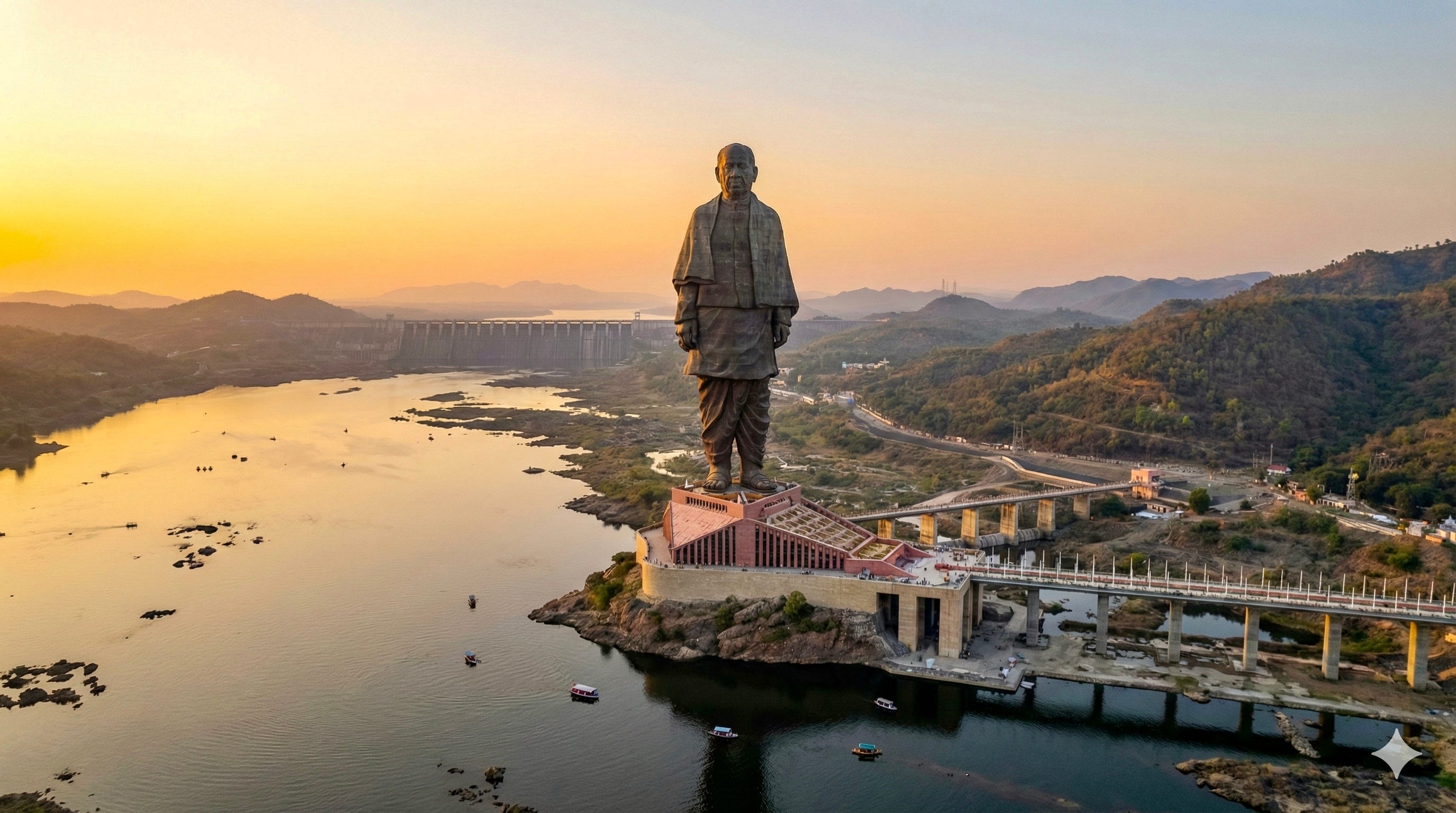
Statue of Unity
8. Semiconductors: Where Every Constraint Meets
The semiconductor sector functions as a live stresstest of India’s ability to integrate its macro fundamentals with its hardware reality. Semiconductors are simultaneously an economic imperative, a financial challenge, a geopolitical battleground, a policy showcase, and an energy intensiveinfrastructure. ISM 1.0 created a foundational ecosystem; ISM 2.0 targets domestic equipment and materials, full stack IP, and supplychain fortification. If executed coherently, India could position itself as a trusted alternative semiconductor node insulated from US - China technology wars.
Yet each constraint dimension presents an obstacle. Economically, multi trillion rupee capital deployment confronts Centre state fiscal scissors; financially, long cyclefab investments coexist with retail credit stress and constrained state balance sheets; industrially, the domestic supply chain for tools and materials barely exists; geopolitically, export controls tighten access to critical equipment; governance wise, land and environmental clearances remain slow and uneven.
Powerquality instability, water stress, and climate risk directly threaten fabs’ uptime and cost structure. The result is that India’s semiconductor ambition faces a convergence of constraints that no single reform can solve, it requires a whole of system realignment that reaches from grid stability and water security to fiscal devolution and trade strategy.
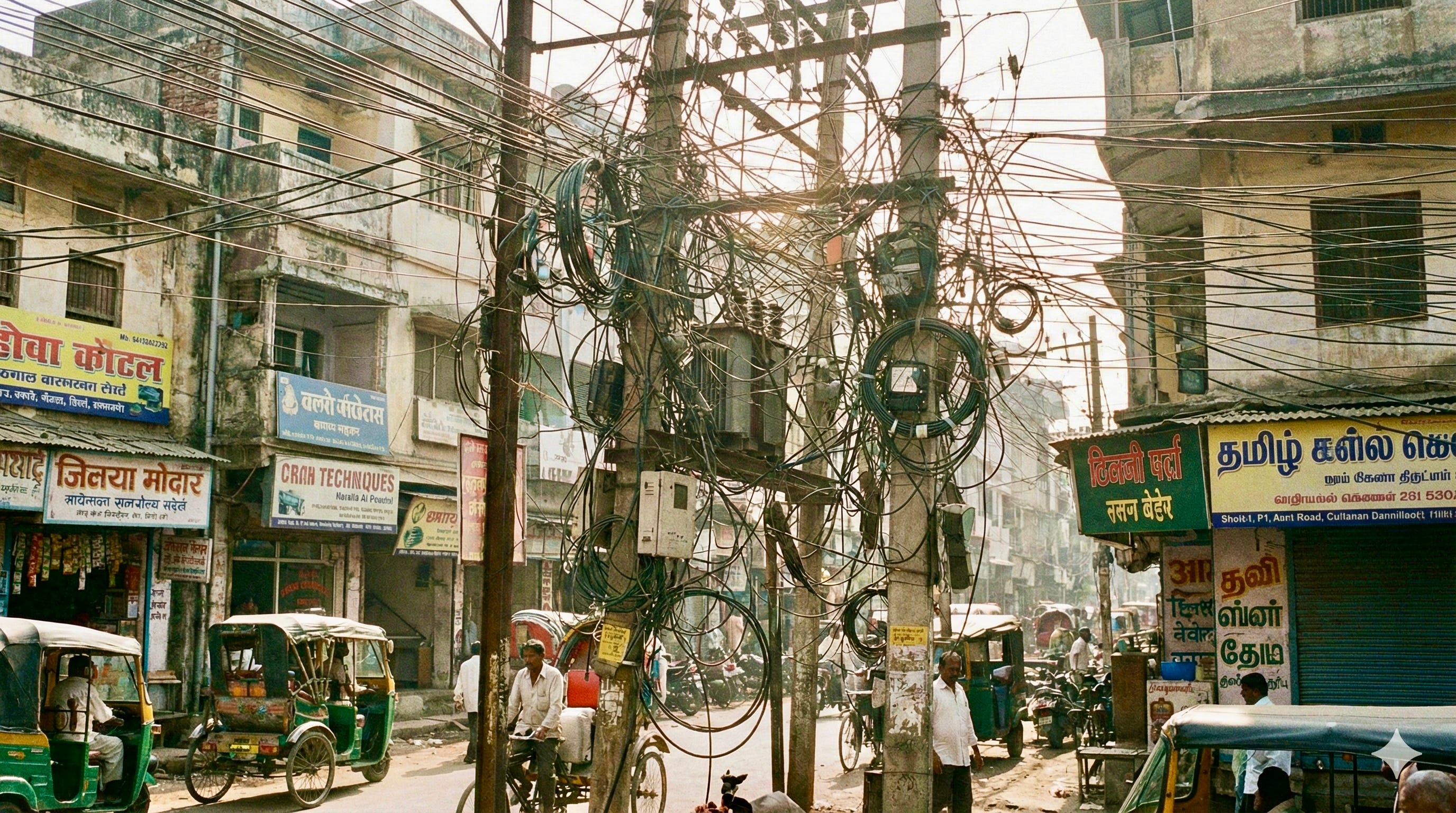
9. Constraints Cascade and the Narrowing Window
These dimensions do not operate in isolation; they cascade and amplify. A fiscal devolution gap forces states into debt, which forces deferral of infrastructure investment; infrastructure gaps defer manufacturing projects, compress investment windows, and reduce capital productivity; reduced productivity lowers GDP growth, which tightens fiscal space, reinforcing the original devolution problem.
Energy policy volatility prevents supplychain development; dependency on imports justifies further intervention; further intervention perpetuates volatility, suppressing new investment. Labour market uncertainty deters MSME scaling, pushing employment into capital intensive sectors misaligned with India’s comparative advantage, slowing productivity and undermining the demographic dividend. In logistics and regional integration, incomplete corridors prevent diversification away from China, maintaining import concentration and undermining India’s promise as an alternative.
Addressing this requires not merely better fundamentals, but coherent integration across them. That means aligning fiscal authority with expenditure responsibility between the Centre and states, designing a genuine National Manufacturing Strategy that ties subsidies to clear objectives, embedding trade agreements in a whole of government supplychain resilience assessment, and legislating multi decade certainty for energy transition and grid integration.
It means accelerating land acquisition while preserving protections, modernising environmental standards with transparent enforcement, standardising labour code implementation with real state level capacity building, and treating semiconductors as a systemintegration test rather than a standalone trophy sector.
India’s title as the Next China is not yet earned. The fundamentals are real and powerful, but the hardware, physical, institutional, and human still demand active friction management.
The question is not whether India can become a manufacturing power, it is whether it can govern its own complexity fast enough to convert advantage into dominance before the window of geopolitical opportunity closes.

GSLV Mark III
Subscribe to The Black Line and Varad Dongre to keep following the movements that shape power and price.
Operational Notice
This content is for strictly educational purposes and scenario analysis. It does not, under any circumstances, constitute investment advice, a buy/sell call, or financial counseling. The reader bears sole responsibility for their decisions and the execution of their market movements.

 | A guest post by
|
Strong post, I love insights from economies we don’t hear enough about (yet).
I’m curious how the recent “mother of deals” could change the outlook for India and Europe. If India wants to become a real “China 2.0” a deal like that (lower tariffs, simpler rules, more investment) feels like a meaningful accelerator.
If that’s true, the key question is: which sectors will feel the India-EU deal first and most materially?
I'm curious how you see that playing out.
It’s fascinating how you broke down the "China +1" narrative versus the actual physical "hardware" constraints on the ground. Do you think India's fragmented policy architecture is something that can be fixed with better central planning, or are these local operational frictions just an inevitable part of growing such a massive, diverse economy? :)
I’ve subscribed and would be happy to support each other. We might not be in the exact same niche, but I really enjoyed your analysis—maybe you’ll find my content interesting too!
Jorrit